
When people plan a home purchase, the first number they look at is the mortgage payment. It is an important number, but it is rarely the whole story. Owning a home comes with property taxes, insurance, association dues, utilities, and the steady cost of keeping a house in good repair. In a desert climate, a few of those items deserve extra attention.
This guide walks through each part of the real cost of ownership in the Las Vegas Valley and explains how to estimate it before you make an offer. It includes a clear explanation of how Nevada property taxes work, including the tax cap for owner-occupied homes and the installment schedule published by Clark County, and it stays away from guesses about rates or prices that change from year to year. Where a specific figure matters, we point you to the source that publishes it.
Think in terms of total monthly cost
A mortgage payment has two core parts: the principal you repay and the interest you owe. Lenders usually add the monthly share of your property taxes and homeowners insurance into the payment and hold it in an escrow account, which is why you may hear about PITI, short for principal, interest, taxes, and insurance. But there are other costs that do not pass through escrow:
- HOA dues, if your home is in an association.
- Utilities, including electricity, water, sewer, trash, natural gas, and internet.
- Routine maintenance and repairs.
- Larger replacements, such as the roof, the air conditioning system, and the water heater.
- Pool and landscape costs, if you have them.
The best approach is to build a budget with every one of these categories, using real quotes for the specific property you are considering. Two homes with the same price can have very different true monthly costs.
How Nevada property taxes work
Property tax is one of the largest ongoing costs of ownership, and Nevada’s system has some distinctive features. Understanding them helps you estimate your bill accurately and avoid surprises.
Assessed value
In Nevada, property is assessed at 35 percent of its taxable value. The county assessor determines the taxable value using methods set by state law, and that figure is not the same as the price you pay for the home. Your tax bill is then calculated by applying the tax rates of the local taxing entities in your area to the assessed value. Rates differ across the valley because different combinations of entities, such as the city, the school district, and special districts, apply in different areas.
The tax cap for owner-occupied homes
Nevada limits how fast your tax bill can rise through a partial abatement, commonly called the tax cap. According to the Clark County Assessor, the law applies a 3 percent cap on the tax bill of an owner’s primary residence, whether a single-family house, townhouse, condominium, or manufactured home. A cap of up to 8 percent applies to residences that are not owner-occupied, as well as to land, commercial buildings, and other property types. New construction does not qualify for any cap in its first fiscal year, but receives the 3 percent or up to 8 percent cap beginning the following fiscal year.
Here is how the cap works in practice. It limits the increase in your tax bill, not the increase in your property’s value. If last year’s tax on an owner-occupied home was $2,000, the cap would limit this year’s bill to no more than about $2,060, even if the standard calculation produced a higher figure. That is a simple illustration, not a prediction for any home, and the actual calculation can involve a lower factor in some years.
Make sure your primary residence status is on file
Per the Clark County Assessor, only one property in Nevada may be designated as your primary residence, and the 3 percent cap depends on that designation. A newly recorded ownership document can remove the owner-occupied designation, and you may need to complete a new owner-occupancy postcard to retain it. Ask your agent or escrow officer how to confirm your status after closing.
When taxes are due
Tax bills are mailed once a year by the beginning of August. In Clark County, taxes are due on the third Monday in August, but when the bill exceeds $100, you may pay in four installments. The installment due dates are the third Monday in August and the first Mondays in October, January, and March. These are not quarterly dates, so they are not evenly spaced. Payments are due on those dates and can generally be made within ten days without a penalty, after which penalties apply. For example, a single delinquent installment carries a penalty of four percent of the installment amount, and the penalties increase if more installments are delinquent.
Most buyers with a mortgage never write these checks, because the lender collects a monthly amount into escrow and pays the bills when they come due. If you pay cash or your loan has no escrow, mark the due dates on your calendar. The Treasurer’s Office publishes the exact dates for each fiscal year, and you can look up the bill for any parcel on the county’s website.
Buying and selling mid-year
If you buy a property during the tax year, you are responsible for any taxes not paid as of the close of escrow. In practice, taxes are prorated at closing so that the seller covers the period they owned and the buyer covers the period after. Your escrow officer will show how this is calculated on the settlement statement. Our guide to closing costs in Nevada explains how prorations appear.
To estimate the tax on a particular home, do not rely on the seller’s current bill alone, since a sale can change the taxable value for the following year and the owner-occupancy status may differ. Ask your agent and lender to look at the assessor’s records and give you a realistic range.
Homeowners insurance
Your lender will require homeowners insurance, and it protects you against covered losses such as fire, theft, and certain kinds of water damage. A few practical points apply in the valley.
- Get quotes before you make an offer. Premiums vary based on the age of the home, the roof, the construction, the coverage you choose, the deductible, and your claims history.
- Understand what is not covered. A standard policy usually does not cover flood damage, and it may have limits or exclusions for certain kinds of water damage. If your property is in or near a flood zone, ask about separate flood coverage.
- Pay attention to the roof and systems. The age and condition of the roof and other systems can influence both availability and cost.
- Review liability and special items. A pool, a trampoline, or valuable personal property may require additional coverage or a higher liability limit.
- Condo owners need a different policy. If you own a condominium, the association’s master policy and your own unit policy work together. Ask what each covers. Our article on buying a condo, townhome, or HOA home goes into this.
HOA dues and assessments
If the home is in an association, dues are a fixed part of your monthly cost, and they can change over time. Ask what the dues include, how often they have increased, whether any special assessments are planned, and how well the reserve fund is funded. A community with low dues and no reserves can be more expensive in the long run than one with higher dues and a healthy reserve. The resale package that Nevada requires sellers to provide contains the budget and the financial statements you need to answer these questions.
Also ask about one-time charges at closing, such as capital contributions or transfer fees, and whether the buyer or the seller customarily pays them. These vary by association.
Utilities in a desert climate
Utility costs are where the desert shows up most clearly in a household budget. Summer cooling is the largest single factor for many homes, and water use depends heavily on landscaping and whether there is a pool.
Electricity and cooling
Several features of a home influence how much it costs to keep cool:
- The age, size, and efficiency of the air conditioning system, and how well it has been maintained.
- Insulation in the attic and walls, and the quality and shading of the windows.
- The direction the house faces and how much shade it receives, especially on west-facing walls and windows.
- The size of the home and the number of stories, since heat rises.
- Whether the home has solar panels, and if so whether they are owned or leased.
Ask the seller for a year of electric bills so you can see both the summer and winter costs. Utility companies often offer budget billing plans that average costs over the year, and many offer programs and tips for managing summer use.
Water and landscaping
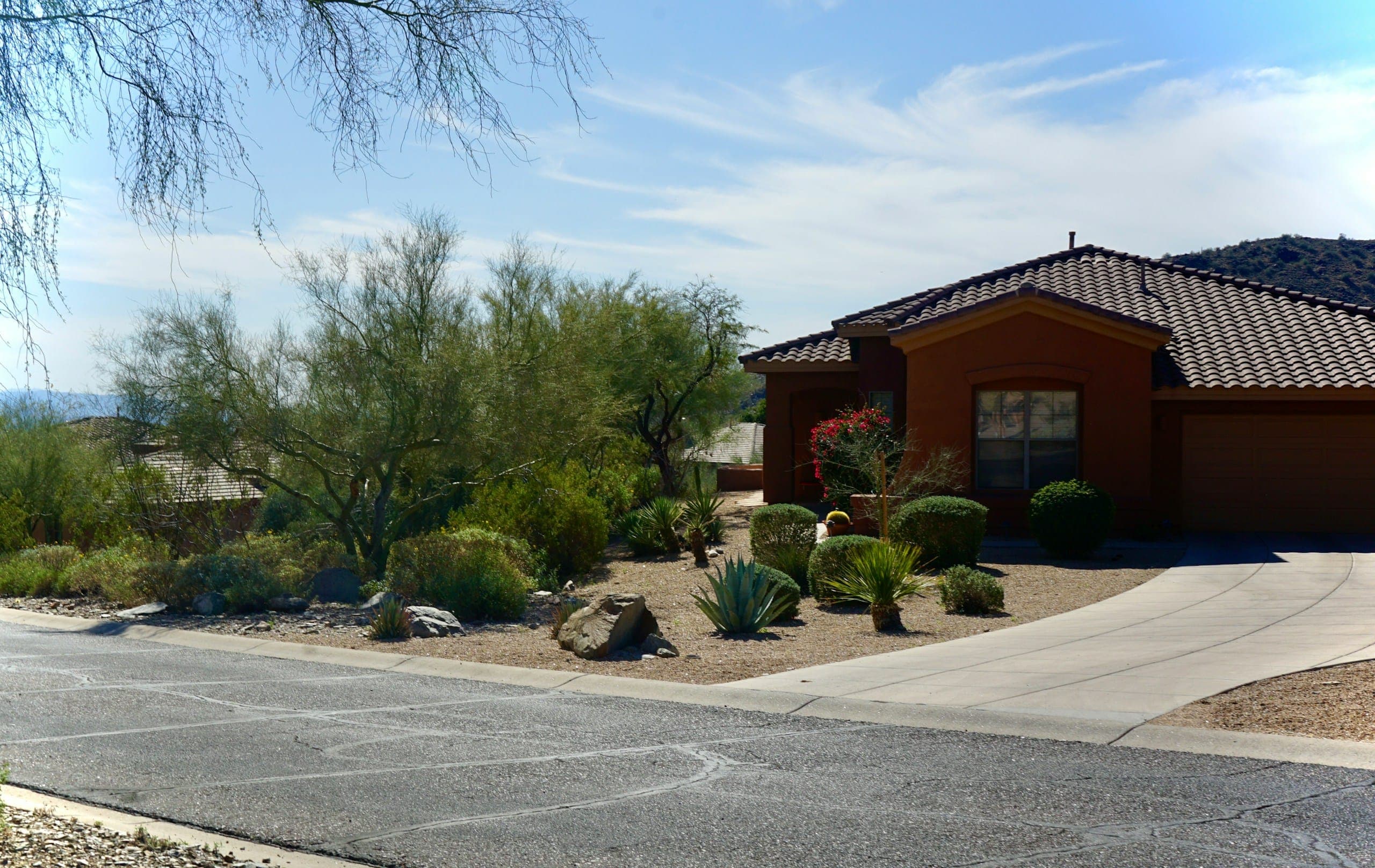
Southern Nevada has strong water conservation programs, and rules and incentives regarding landscaping change over time. Desert landscaping with efficient irrigation generally uses far less water than traditional grass. If a home has a large lawn, a pool, or an irrigation system that has not been maintained, expect higher water bills. Ask the seller for water bills as well, and ask about any landscaping restrictions in the association rules.
Other utilities
Do not forget natural gas, sewer, trash, internet, and any mandatory community or district charges. Ask the seller or your agent which providers serve the address and what typical monthly charges look like.
Maintenance, repairs, and the big replacements
Every home needs ongoing care, and the cost is easy to underestimate. One common rule of thumb is to plan to set aside a percentage of the home’s value each year for maintenance and repairs. Many planners suggest somewhere around one percent, with older homes and homes with pools or large yards often costing more. Treat that as a starting point, not a rule, and adjust based on the inspection.
It helps to separate costs into two groups.
Routine upkeep
- Air conditioning service and filter changes, ideally before summer each year.
- Pest control, if you choose a service.
- Landscape and irrigation maintenance.
- Pool service and chemicals, if you have a pool.
- Painting and sealing exterior surfaces that the sun fades.
- Small repairs around the house.
Big-ticket replacements
These do not happen every year, but they will happen, so plan for them. The big ones in a desert home are the air conditioning system, the roof, the water heater, pool equipment, and window and door replacements. The inspection report will tell you where each major system stands. Ask your agent to help you estimate when each might need replacing and set aside savings accordingly. Our guide to home inspections in Las Vegas explains how to read that report.
If you plan to add a pool
A pool is a wonderful feature in this climate, and it is also a continuing expense. Beyond the cost of building or buying a home with one, plan for chemicals or a service, electricity for the pump, periodic equipment repairs and replacements, water to refill after evaporation, resurfacing over the years, and a higher insurance liability limit. Safety barriers and local regulations also apply. A pool inspection before you buy can reveal the condition of the equipment, surface, and plumbing.
A budget worksheet you can use
Copy this list into a spreadsheet and fill it in with real quotes for each home you are seriously considering. Doing this for two or three finalists makes the true differences clear.
- Principal and interest, from your lender’s Loan Estimate.
- Property taxes, using the assessor’s records and your agent’s estimate, noting the tax cap and primary residence status.
- Homeowners insurance, based on a quote for the specific property.
- HOA dues and any planned special assessments.
- Electricity, using the seller’s past bills and adjusting for your household.
- Water, sewer, and trash.
- Natural gas and internet.
- Pool and landscape service, if applicable.
- Routine maintenance reserve.
- Big-ticket replacement savings for the roof, air conditioning, and water heater.
Add the monthly total, then compare it to your take-home pay. If the total is uncomfortable at the top of your approved loan amount, consider a lower price or a home with lower ongoing costs. Our first-time buyer guide explains how to set a budget that you can live with.
Ways to lower the cost of ownership
- Choose the home with ownership costs in mind, not just the price. Look at insulation, window quality, shade, and system ages.
- Maintain the cooling system. Regular service extends its life and keeps it efficient.
- Add shade and window treatments. Shade trees, awnings, patio covers, and reflective window film can reduce heat gain.
- Use efficient landscaping and irrigation. Desert-friendly plants and a well-adjusted irrigation controller can cut water costs.
- Shop for insurance. Compare quotes and review your coverage periodically.
- Confirm your primary residence status so you receive the owner-occupied tax cap.
- Compare HOA dues and reserves, not only the monthly number.
- Address small problems early. A small leak or crack is cheaper to fix than the damage it causes if ignored.
Frequently asked questions
- When are Clark County property taxes due?
- Bills are mailed once a year, and taxes are due on the third Monday in August. When the tax exceeds $100, owners may pay in four installments, due on the third Monday in August and the first Mondays in October, January, and March. Payments can generally be made within ten days of the due date without penalty. The Treasurer’s Office publishes the exact dates each fiscal year.
- What is the Nevada property tax cap?
- It is a partial abatement that limits the increase in your tax bill. The Clark County Assessor states that a 3 percent cap applies to the tax bill on an owner’s primary residence, and a cap of up to 8 percent applies to other residences, land, and commercial property. New construction receives the cap beginning the fiscal year after its first.
- Does my mortgage lender pay my property taxes?
- Many lenders collect a monthly amount into an escrow account and pay the taxes and homeowners insurance for you when they come due. If your loan has no escrow, or you pay cash, you are responsible for paying the bills on time yourself.
- How much should I budget for maintenance?
- A common rule of thumb is to set aside around one percent of the home’s value each year, though older homes and homes with pools or large yards may cost more. Use your inspection report to refine the estimate, and plan separately for big replacements like the roof and air conditioning.
- Does homeowners insurance cover flooding?
- A standard homeowners policy usually does not cover flood damage. If your property is in or near a flood zone, or if you simply want protection, ask your insurance agent about separate flood coverage.