
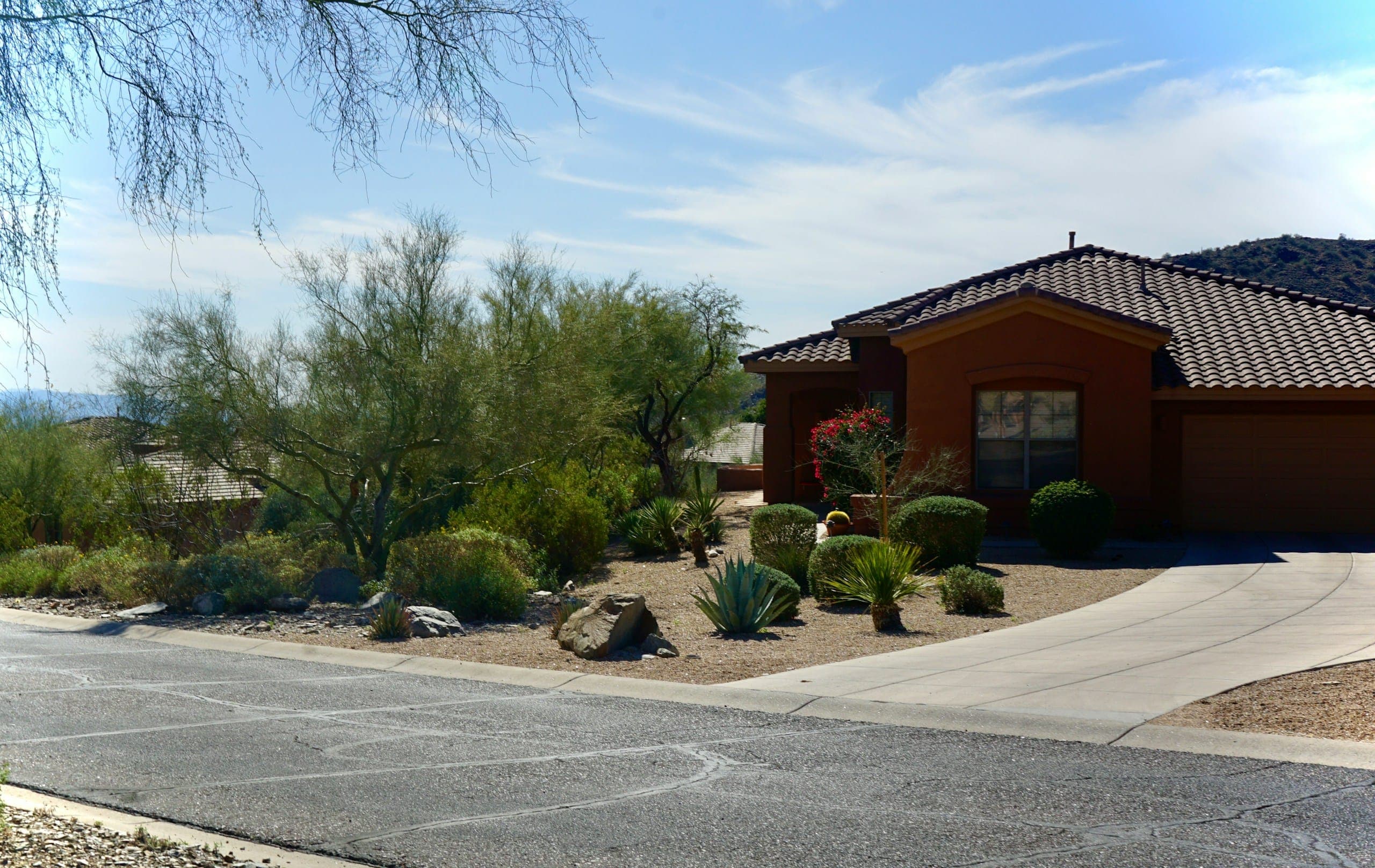

Buying your first home is one of the largest financial decisions most people ever make, and it comes with its own vocabulary, deadlines, and paperwork. In the Las Vegas Valley it also comes with a few local twists: desert-climate maintenance, a high share of homes inside homeowners associations, and Nevada-specific disclosure rules that protect buyers when they are followed.
This guide walks through the whole process in the order it actually happens, from deciding whether you are ready to the day you receive your keys. It is written for first-time buyers, but anyone who has not bought in Nevada before will find the Nevada details useful. Where numbers matter, we point you to the source that publishes the current figure instead of quoting a number that may be out of date by the time you read this.
Step 1: Decide whether you are ready to buy
Readiness is part money and part life situation. On the money side, lenders look at your income, your debts, your credit history, and the cash you have available. On the life side, a home purchase makes the most sense when you expect to stay long enough for the costs of buying and selling to be outweighed by the benefits of ownership. There is no universal minimum, but most buyers who are comfortable with the decision are planning to stay for several years.
A few honest questions are worth answering before you tour a single home:
- Is your income stable enough to carry a mortgage payment, property taxes, insurance, and routine maintenance for years, not months?
- Do you have savings beyond the down payment and closing costs, so that a broken air conditioner in July does not become a crisis?
- Are you comfortable with the monthly payment at the top of your approved range, or only at the bottom?
- Do you know roughly how long you plan to live in the home, and does that fit the type of property you are considering?
If the answers are mostly yes, you are ready to build a plan. If they are mixed, that is useful information too. A conversation with a broker and a lender several months before you want to buy can show you exactly what to improve, whether that is credit, savings, or debt, and give you a realistic timeline.
Step 2: Build a realistic budget
The number a lender approves you for is the most they are willing to lend, not the amount that is comfortable for your household. Start from your monthly take-home pay and work backward. Your true monthly housing cost has several parts, often summarized as PITI plus extras:
- Principal and interest on the loan, which depends on the price, down payment, interest rate, and loan term.
- Property taxes, which in Nevada are collected by the county and usually paid through your lender’s escrow account along with your payment. Ask your agent to help you estimate the tax on a specific property rather than guessing.
- Homeowners insurance, which lenders require. Quotes vary with the age of the home, roof, and coverage choices, so get a quote before you make an offer.
- HOA dues, if the home is in a homeowners association. Dues are paid on top of your mortgage and can change over time.
- Utilities, including electricity and water. In the desert, summer cooling costs and landscape watering are real line items.
- Maintenance and repairs, which should be a planned monthly savings amount, not a surprise.
A practical tip
Ask your lender for a payment estimate that includes taxes, insurance, and any HOA dues for the specific kind of home you are considering. A payment quoted on principal and interest alone can understate the real monthly cost by a meaningful amount.
Step 3: Check your credit and get pre-approved
Your credit profile affects both whether you qualify and what interest rate you are offered. You are entitled to free copies of your credit reports from the three major bureaus through the federal government’s official site, AnnualCreditReport.com. Review them for errors, old accounts that are not yours, and balances that look wrong. Disputing a genuine error can take weeks to resolve, which is why it is best to check early.
A pre-qualification is a quick estimate based on information you provide. A pre-approval is much stronger: the lender verifies your income, assets, and credit and issues a letter stating how much you are approved to borrow, subject to the property and final underwriting. Sellers take offers with a pre-approval letter far more seriously, and in a competitive situation a weak or missing letter can cost you the home.
Once you have a pre-approval, avoid changes that can disrupt it before closing. Do not open new credit cards, finance a car or furniture, change jobs without talking to your lender, or move large sums of money around without documentation. Lenders re-verify everything shortly before closing, and surprises at that stage can delay or derail a purchase.
Step 4: Understand your loan options
There is no single best mortgage. The right one depends on your credit, savings, income, and plans. The main categories are:
- Conventional loans are not backed by a government agency. They often reward strong credit with better rates, and the down payment required can be lower than many first-time buyers expect. Private mortgage insurance is typically required when the down payment is under twenty percent.
- FHA loans are insured by the Federal Housing Administration and are designed to be more accessible to buyers with modest savings or less-than-perfect credit. They carry mortgage insurance premiums and have loan limits and property standards.
- VA loans are available to eligible veterans, service members, and some surviving spouses. They can offer significant advantages, including no required down payment in many cases. It is worth exploring if it applies to you.
- Down payment assistance programs exist for qualifying buyers. The Nevada Housing Division publishes information about its homebuyer programs, and some lenders can combine them with a primary loan. Eligibility, income limits, and terms change, so ask a lender who works with the programs.
Compare at least two or three lenders. Ask each for a written Loan Estimate, a standardized federal form that makes it possible to compare interest rates, lender fees, and estimated closing costs side by side. The lender that quotes the lowest rate is not always the cheapest once fees are included, and the one with the best communication can matter just as much when deadlines get tight.
Step 5: Choose your agent and sign a buyer agreement
Your agent will be your guide, negotiator, and advocate for the next several weeks, so choose someone who listens, answers questions directly, and knows the part of the valley you are shopping in. Ask how long they have worked in the area, how they communicate, and how they handle multiple-offer situations.
Since the industry practice changes that took effect in August 2024, buyers who work with an agent are generally asked to sign a written buyer representation agreement before touring homes with that agent. The agreement spells out the services you will receive, the term of the relationship, and how the agent will be paid. Read it carefully and ask questions. Compensation is negotiable, and a good agent will explain the terms plainly instead of rushing you to sign.
At Lyons Share Real Estate, owners Karla and Patrick Lyons lead a locally owned brokerage with decades of Las Vegas experience, and our approach is built around honest guidance and clear communication. You can read more about how we work on our services page or call us at (702) 379-9768 to start a conversation.
Step 6: Search with a plan
Before you start browsing listings, separate your needs from your wants. Needs are the features you cannot compromise on: a commute you can live with, enough bedrooms, a budget-friendly payment, or a single-story layout. Wants are the nice-to-haves that you can trade off: a pool, a three-car garage, or a particular finish in the kitchen.
The Las Vegas climate and market add a few things to look at closely during showings:
- The air conditioning system. Ask the age of the unit and request maintenance records if the seller has them. A system near the end of its life is a negotiating point and a budget item.
- The roof. Sun exposure is hard on roofing materials. Your inspector will evaluate the roof, but notice stains, lifted tiles, or patched areas while you tour.
- Windows and shade. West-facing rooms with large windows can run hot in summer. Window film, shade trees, and covered patios make a real difference in comfort and utility costs.
- Pools and landscaping. A pool is a lifestyle feature and an ongoing cost for chemicals, equipment, electricity, and repairs. Desert landscaping is lower maintenance than turf, but irrigation systems still need attention.
- Water heaters, plumbing, and drainage. Look for signs of past leaks, check water pressure, and notice how water drains away from the foundation.
Visit the neighborhoods you are interested in at different times of day, including a weekday evening and a weekend morning. Drive the commute you would actually make. Our guide to the Las Vegas Valley’s neighborhoods can help you narrow down where to look first.
Step 7: Write a strong offer
Once you find the right home, your agent will prepare a purchase offer on the standard forms used in Southern Nevada. Price gets the most attention, but it is only one part of what makes an offer attractive and sound. Your agent will help you weigh the following:
- Offer price, supported by recent comparable sales your agent pulls from the multiple listing service.
- Earnest money deposit, a good-faith deposit held by the escrow company that is credited toward your purchase. How much is appropriate depends on the price and the competition.
- Financing terms, including your down payment, loan type, and the strength of your pre-approval.
- Contingencies and deadlines, such as inspection, appraisal, and loan approval periods. These protect you, but shortening or waiving them can make an offer more competitive and also adds risk, so decide with your agent.
- Closing date and possession, which can matter a great deal to a seller who needs time to move.
- Requests for seller credits or repairs, which are negotiated and should be proportionate to what the market will bear.
Expect a counteroffer. Negotiation is normal, and a counter is not a rejection. Your agent will advise you on which points to hold firm on and where flexibility costs little. Remember that the lowest price is not the only measure of a good deal; a smooth transaction with a seller who is motivated to close can be worth more than a slightly lower number with a difficult counterpart.
Step 8: Escrow, disclosures, and due diligence
When the seller accepts your offer, you enter escrow. In Nevada, a neutral escrow or title company holds your earnest money, collects documents, orders the title search, and coordinates the funds and signatures needed to close. Your contract sets deadlines for each task, and meeting them is how you protect your deposit and your rights.
The Nevada seller’s disclosure
Nevada law requires sellers of most existing homes to complete a Seller’s Real Property Disclosure form describing the condition of the property and any known defects, and to deliver it to the buyer at least ten days before the sale closes. The form is not required for new home sales. If the seller never provides a properly completed form, the buyer may rescind the contract without penalty. The disclosure is valuable, but it is not a substitute for an inspection: it only covers what the seller knows. The Nevada Real Estate Division publishes a free Residential Disclosure Guide that explains the buyer’s rights in detail and is worth reading.
The home inspection
Hire a licensed home inspector, and attend the inspection if you can. A good inspector will evaluate the structure, roof, plumbing, electrical system, heating and cooling, water heater, and visible signs of moisture or pests. The report is a tool for negotiating repairs or credits and for planning your first-year budget. You may also choose specialty inspections for a pool, sewer line, or roof when the situation calls for it.
The appraisal
If you are financing the purchase, your lender will order an appraisal to confirm that the home is worth at least the loan amount. If the appraisal comes in below the contract price, you and the seller can renegotiate the price, you can cover the gap in cash, or you may be able to cancel under your contract’s terms. Your agent will walk you through the options if it happens.
HOA documents
Many Las Vegas homes sit inside a homeowners association. When you buy in one, the seller must provide a resale package at the seller’s expense that includes the governing documents, the budget and financial statements, and a statement of fees and unpaid charges. Under Nevada law, a buyer generally has until midnight of the fifth calendar day after receiving the resale package to cancel the contract in writing. Read the rules about parking, rentals, exterior changes, and fines, and check the association’s reserves and any pending special assessments. An HOA that lives within its rules and funds its reserves is a good sign; one that does not can mean future dues increases.
Step 9: The final stretch to closing
As closing approaches, your lender completes underwriting and issues a Closing Disclosure, a federal form that lays out your final loan terms and closing costs. You are entitled to receive it at least three business days before closing. Compare it line by line with your original Loan Estimate and ask about anything that changed. Our article on closing costs in Nevada breaks down what each charge means and who customarily pays it.
- Confirm your homeowners insurance is bound and the lender has the policy.
- Complete the final walkthrough, ideally within a day or two of closing, to make sure agreed repairs were done and the home is in the expected condition.
- Arrange your cash to close by wire transfer or cashier’s check as directed by the escrow company. Always verify wiring instructions by calling a phone number you already trust, because wire fraud targeting homebuyers is real.
- Sign your closing documents with the escrow company.
- Once the deed is recorded and funds are disbursed, you receive your keys.
Protect yourself from wire fraud
Criminals impersonate title companies and agents by email and send fake wiring instructions. Never rely on instructions received only by email. Call the escrow officer at a number you verified independently before sending any money.
After you close: your first year in the home
Closing is the beginning of ownership, not the end. In your first weeks, change the locks, locate the main water shut-off and electrical panel, and set up your utility accounts. Set a recurring reminder to service your air conditioning before summer, replace filters, and check for leaks under sinks. Keep your closing documents, inspection report, and receipts for improvements in one place, since they are useful for taxes and for a future sale.
Many owners also use the first year to plan upgrades in a sensible order: safety and mechanical systems first, then comfort and efficiency, then cosmetic projects. Building that plan around the inspection report keeps spending focused on what matters.
Common first-time buyer mistakes to avoid
- Shopping for homes before getting pre-approved, then falling in love with something out of range.
- Budgeting only for the down payment and forgetting closing costs, moving costs, and the cash reserve for early repairs.
- Skipping or rushing the inspection to make an offer more attractive without understanding the risk.
- Changing jobs, opening credit, or making large purchases between pre-approval and closing.
- Ignoring HOA rules and dues, then discovering restrictions that do not fit the way you live.
- Letting emotion override the numbers. There will always be another home; there is not always another chance to recover from an overstretched budget.
How a local brokerage helps
A good agent does more than unlock doors. They explain the process, keep you ahead of deadlines, spot problems in the paperwork, and negotiate on your behalf. Karla Lyons has spent more than four decades in the industry, and Patrick Lyons has served as a Realtor for almost three decades while living in the valley for more than fifty years. If you would like to talk through your plans before you start looking, we are happy to have an honest conversation about timing, budget, and where to begin. You can reach Patrick directly at the number below, or learn more about our team.
This article is general educational information, not legal, tax, or financial advice. Laws, programs, and rates change, so confirm current details with your lender, escrow officer, or an appropriate professional.
Frequently asked questions
- How much do I need for a down payment?
- It depends on the loan program. Some conventional, FHA, and VA options allow smaller down payments than many first-time buyers expect, and some programs require none for eligible borrowers. A larger down payment generally lowers your monthly payment and may remove mortgage insurance, but keeping a healthy cash reserve matters too. A lender can show you the trade-offs with real numbers.
- How long does it take to buy a house in Las Vegas?
- Searching can take a few weeks or several months depending on your criteria and the market. Once an offer is accepted, a financed purchase commonly takes a month or so to close, though the exact timeline is set in your contract and depends on your lender, the appraisal, and the inspection period.
- Do I really need a home inspection?
- It is strongly recommended. The seller’s disclosure only covers what the seller knows, and an inspection can reveal problems with the roof, plumbing, electrical system, or cooling that you would otherwise inherit. The report also helps you negotiate and plan your maintenance budget.
- What is the difference between pre-qualification and pre-approval?
- Pre-qualification is a quick estimate based on information you provide. Pre-approval means a lender has verified your income, assets, and credit and issued a letter stating how much you can borrow. Sellers give pre-approved buyers far more weight.
- Can I cancel after I go under contract?
- Your contract sets out when and how you can cancel, and those rights depend on the deadlines you meet. For example, Nevada gives buyers in an HOA community a window to cancel after receiving the resale package, and the seller’s disclosure rules protect buyers who never receive a completed form. Cancelling outside those protections can put your earnest money at risk, so talk to your agent before you act.